FLYING OFFICER JOHN WILLIAM DOWNS RCAF SERVICE NUMBER J.12886
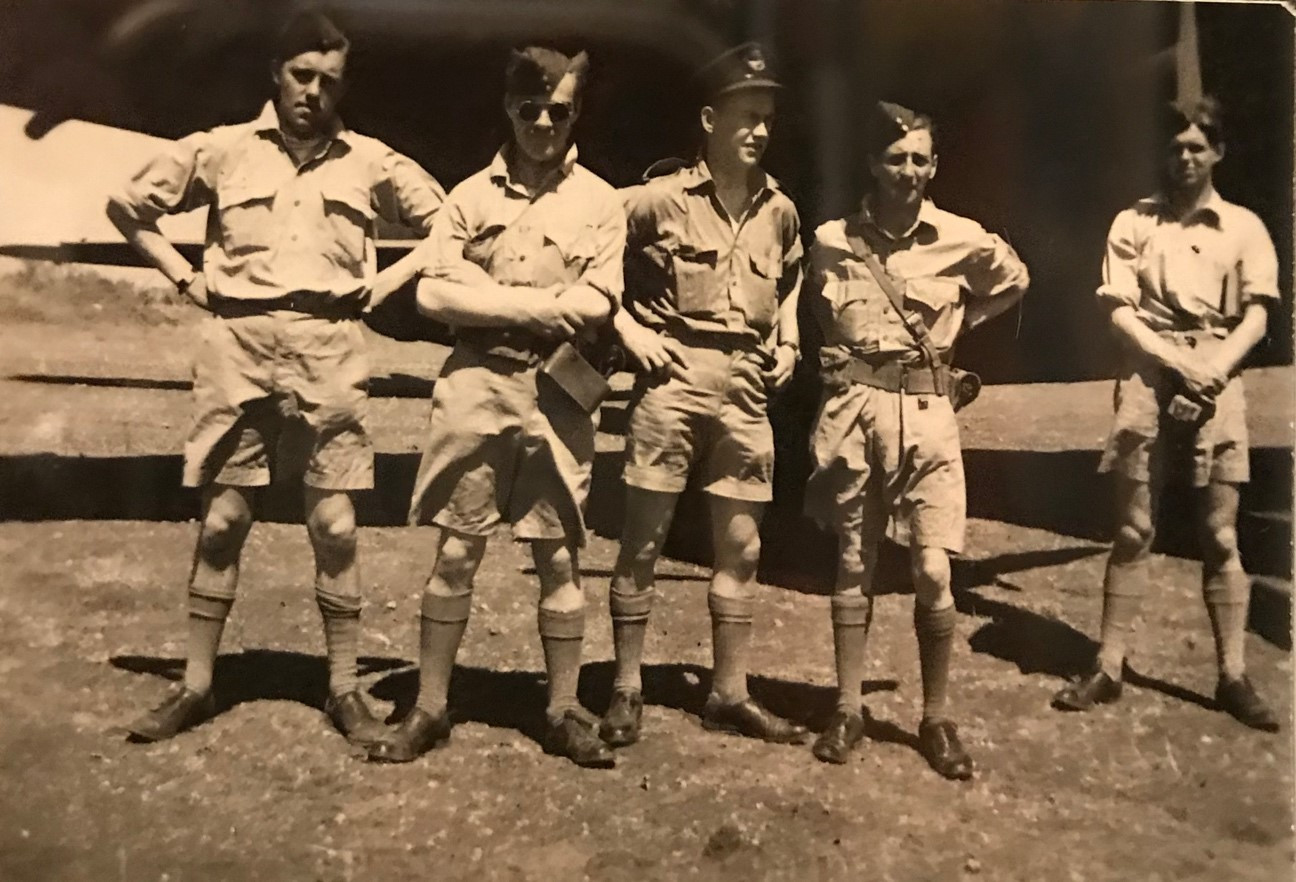
Pictured L-R: Bill Wake, Ron Lewis-Lavender, 'Brush' John Downs, Reg Windett, Mike Wagstaffe (Wellington aircraft in the background). This photo received courtesy of Bill Wake.
A tragic story of a 458 hero. Greater love has no man than this, that a man lay down his life for his family, friends, country. We are grateful to our Canada Flight Correspondents Cate and Adam, who have written a great article about F/O John (Jack) Downs in our Newsletter #272, pages 2-8. We welcome the Downs family to Contact us to add more content to this/his webpage.
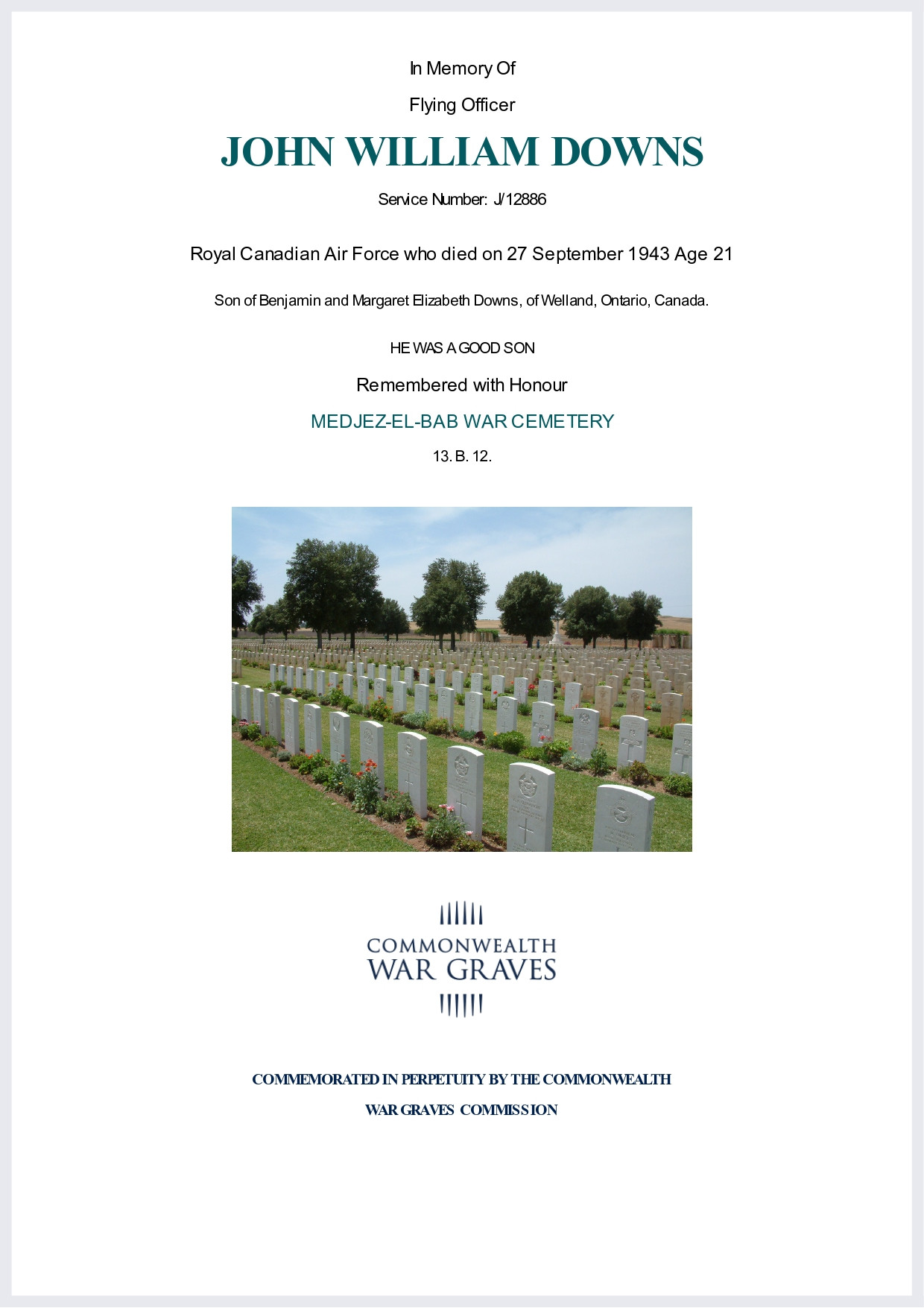
Footnote: from https://www.rcafassociation.ca/heritage/history/fallen-aviators/rcaf-casualties-second-world-war/doidge-to-dwyer/
DOWNS, JOHN WILLIAM F/O(P) J12886. From Welland, Ontario. Died Sep 27, 1943 age 21. #458 Australia Squadron. Death by natural causes(*) while in the #1 RAF General Hospital. Flying Officer Pilot Downs was buried on the Borgel Cemetery, Tunis, exhumed, and reburied in the Medez-el-Bab War Cemetery, Tunisia.
*Our current (2024) Co-President Bill Wake, who was in John's crew, mentions in his video message (at the 2022 Squadron Reunion in Williamtown, NSW) his admiration for captain "Brush" John Downs, and that very sadly, he had died from malaria. A tragic story of another 458 hero. RIP.
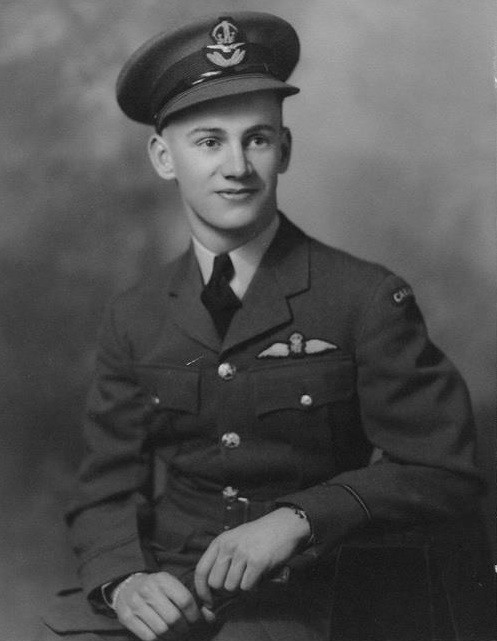
Flying Officer John (Jack) William Downs, or ‘Brush’ Downs as he was affectionately called among his crew. Jack was born March 4th, 1922, in Welland, Ontario, Canada to Father Benjamin and Mother Margaret Elizabeth Hart, both born in England. Jack also had two sisters Grace and Ursula – who both passed away in 2011. His nickname ‘Brush’ while obvious to the English and Australian members of these newsletters, came as a surprise to his family (and to me, I (Cate) had to ask my dad (Adam) what it meant).
I have recently been in touch with Jack Downs’ niece Cathy, daughter of Grace, who never met her Uncle Jack. She was excited to learn more about her great uncle and linked me to other family members. We are in correspondence to find out more of Jack.
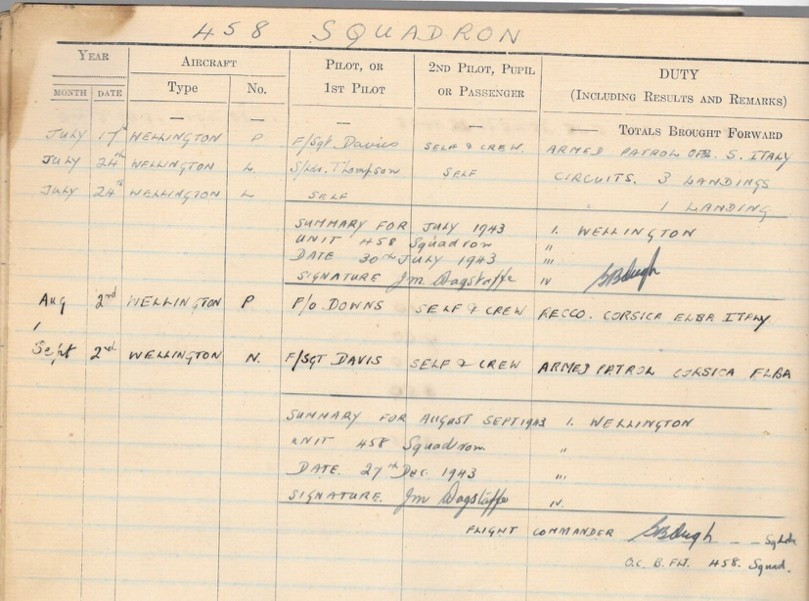
I never met my Great Uncle Michael either. Our family lost touch with Uncle Michael’s wife Pauline (married just 2 months before his death), but I was able to make contact with Pauline’s daughter-in-law Joy, who sent me Michael’s Flying Logbook. Kept for almost 80 years, we have been able to pour through the book together to discover both Michael and Jack’s career with 458 – flying as 1st and 2nd pilots. Hence why we’ve integrated them together in this article.
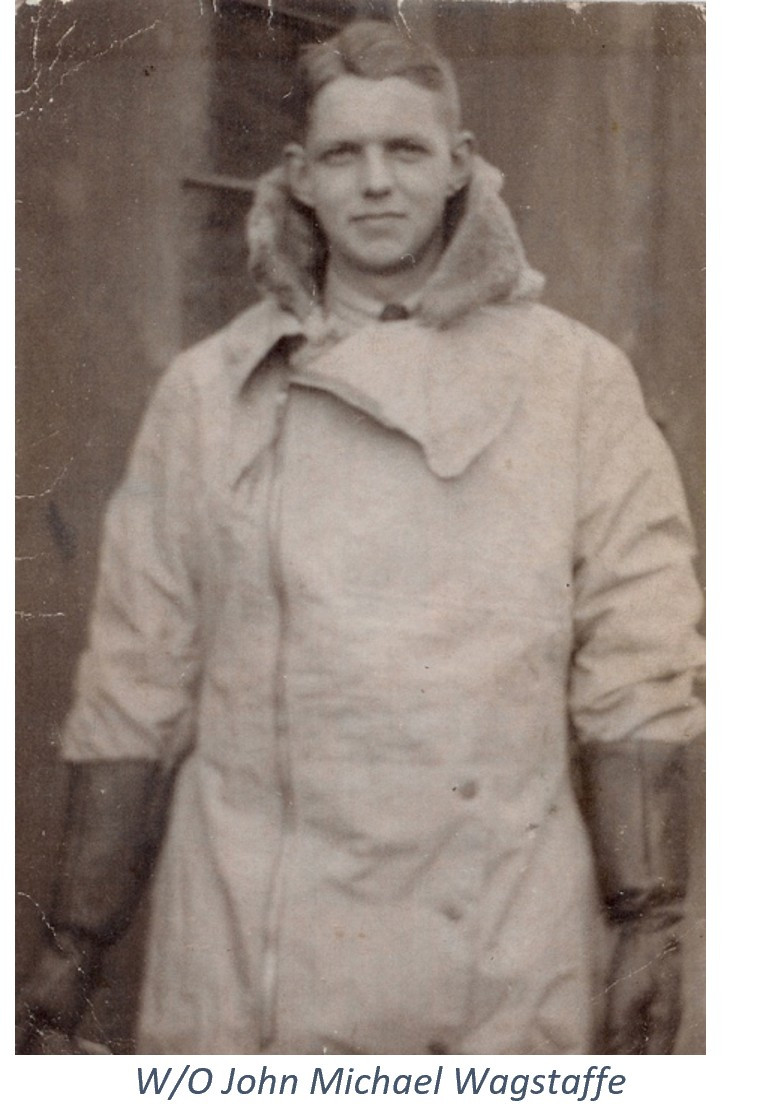
Uncle Michael enlisting in February of 1941. He went from Barclay’s Bank in Harrogate to flying Tiger Moths in Bulawayo in just a few months. Michael proceeded on to Harvards for his wings and while being recommended for fighters moved on to Oxfords and Ansons before moving to George, South Africa for the Navigation reconnaissance course before shipping to England.
Jack Downs joined the Toronto Royal Canadian Air Force Reserve in July of 1941 and went from small town Welland Ontario to training in Lake Erie, Ontario close, in fact, to his grandparents’ cottage. We don’t have more information yet on Jack’s training, but Cathy’s family are in the process of acquiring his records for more details.
It was at this time, in mid 1942, the crew came together for training Vickers Wellington: Jack Downs (First Pilot), Mike Wagstaffe (Second Pilot), ‘Tubby’ Satin (Navigator), Bill Wake – the UK Co-President and subject of Keith Wilkinson’s report in the last editions of the newsletter, Reg Windett, and Ron Lewis-Lavender (Wireless Operators and Air Gunners).
They completed the rest of their training together, including Coastal Operational Training in Silloth from August to February of 1943. This training involved periscope bombing. Dropping depth charges from 50 or so feet above water to practice low flying and gauging the point of release on a target towed by a boat. Dead reckoning: using ‘BABS’ or Blind Approach Beam Systems. Low level bombing: an exercise for Downs to bomb by eye from a height of 50 to 100 feet. Air to air firing: presumably at a drogue towed by another aircraft, and formation flying.
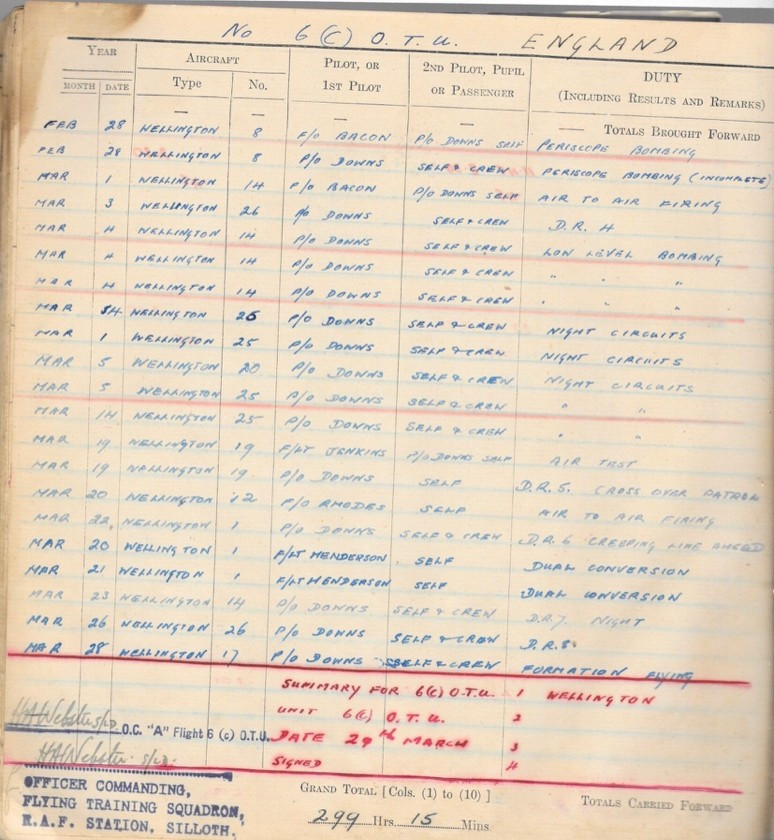
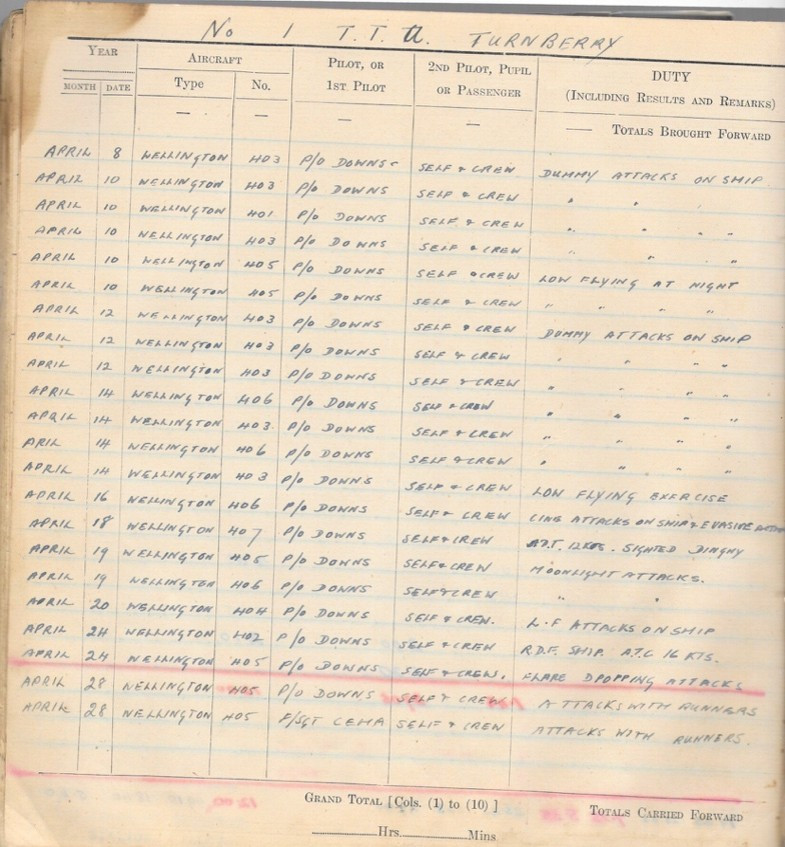
Then to Torpedo Training in Turnberry in March 1943 with Dummy attacks on ships, an exercise for both bomb aimer and pilot to concentrate on flying straight and level at 3000 feet. Low flying at night, attacks with runners, and moonlight attacks.
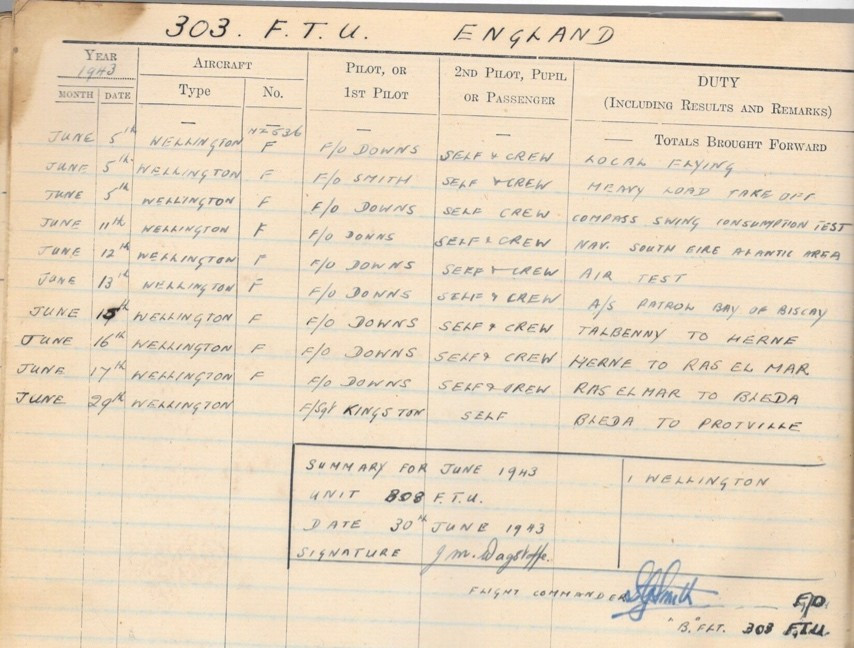
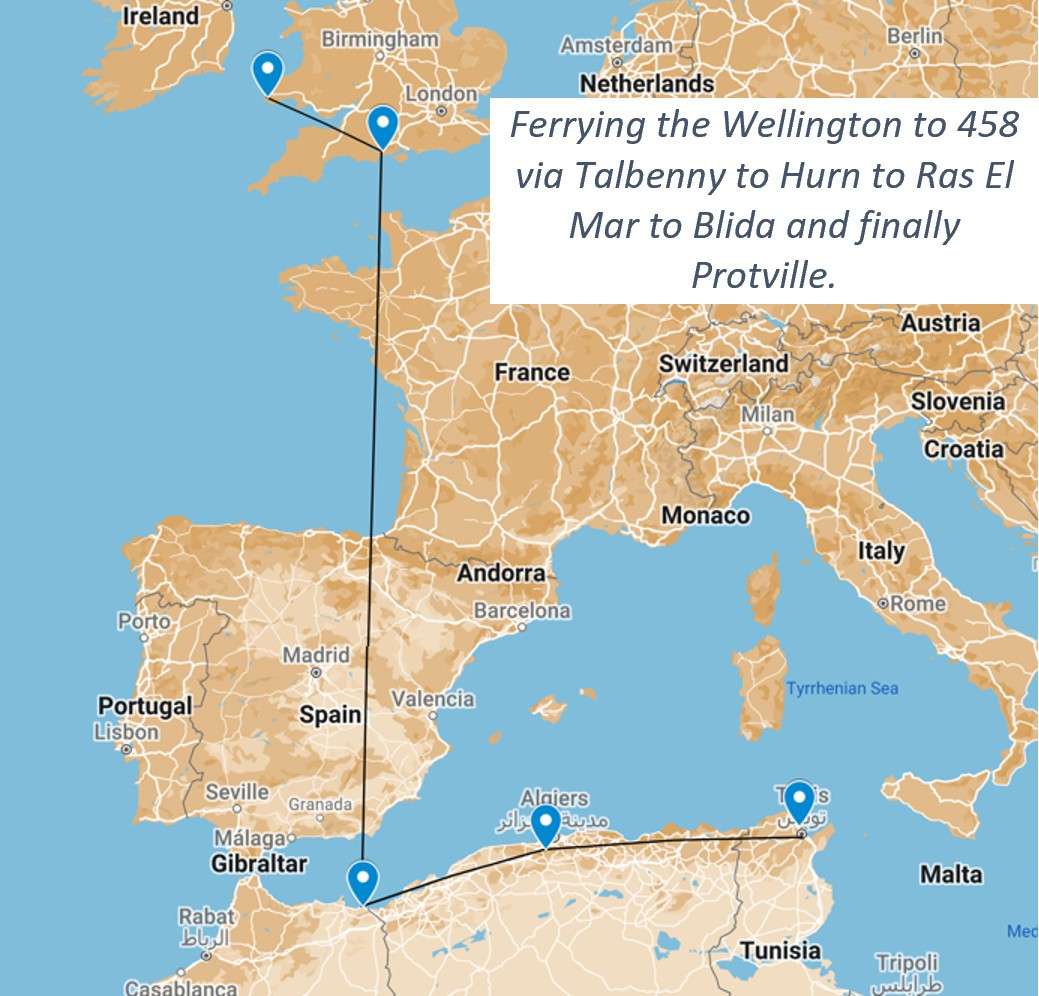
Lastly Ferry Training in Talbenny in June 1943. Heavy load take-off (to simulate a full cargo of depth charges), patrols of the Bay of Biscay, and compass swing consumption tests – a lot of math required to account for magnet deviations. Just nine days later, the crew of Jack Downs left Talbenny to join 458 in Protville via Hurn, Ras El Mar, and Blida.
Their first mission as a crew was August 4th, 1943, a shipping search north of Archipelago Toscano, according to the squadron Ops Book. What happened to Satin, we don’t know, but quickly the crew of Jack Downs took to their task of endless armed patrols along the coasts of Corsica and Sardinia. Michael was admitted to No. 1 RAF Hospital in Protville in September of 1943. We believe he suffered from some sort of insect bite, as he wrote home to thank his parents for sending the rare and hard to find Calamine lotion and a liquid antiseptic called TCP. Michael would never again fly as 2ndpilot to Downs, as Downs himself was admitted to No. 1 RAF Hospital for Malaria and died September 27th, 1943.

The Downs crew was integrated into other crews, and despite this bitter sweet departure, I can’t help but be thankful to the crew members who wrote letters to my father and remembered Michael; the quiet, soft-spoken chap they spent a brief time with. And they remembered Downs, as Bill Wake said in his last report, “A Canadian pilot who I had absolute faith in”. The relatives of Jack Downs were extremely grateful to receive a booklet personally made by Bill Wake about his time with Jack and 458. Cathy and I have been corresponding, and I have been sharing Uncle Michaels logbook, to hopefully piece together both their careers. They have been particularly pleased to see the log book entries with Downs listed as Pilot.
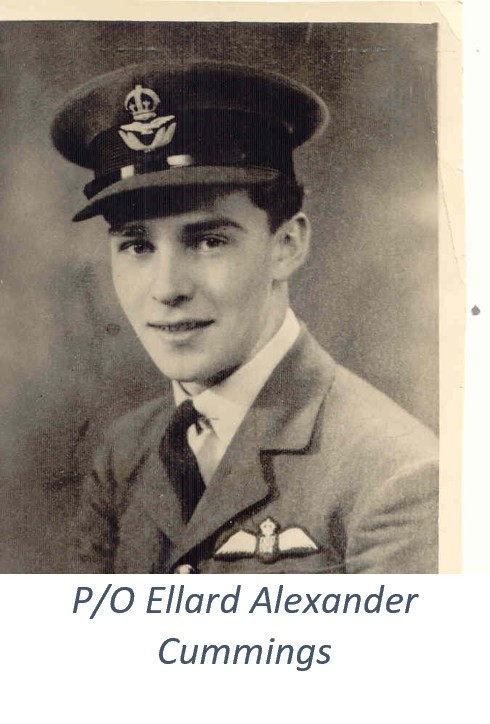
Cathy’s husband Keith Ellard Cummings was named after two uncles that died in the war. Pilot Officer Ellard Alexander Cummings of the RAF was the first Canadian to die in the war September 3rd1939. He died while training in Scotland and in 2012 a memorial was placed on Bennachie, west of Aberdeen, where his plane crashed.
Keith's other uncle, Uncle Kenneth George Cummings of RCAF was shot down over Leipzig, Germany, in 1944.
One particular story the family recalls, was Jack’s plane had been hit at some time and that he had been able to crawl out through the fuselage!
Cathy has said, “The more we read about Uncle Jack, the more we wish we knew.”
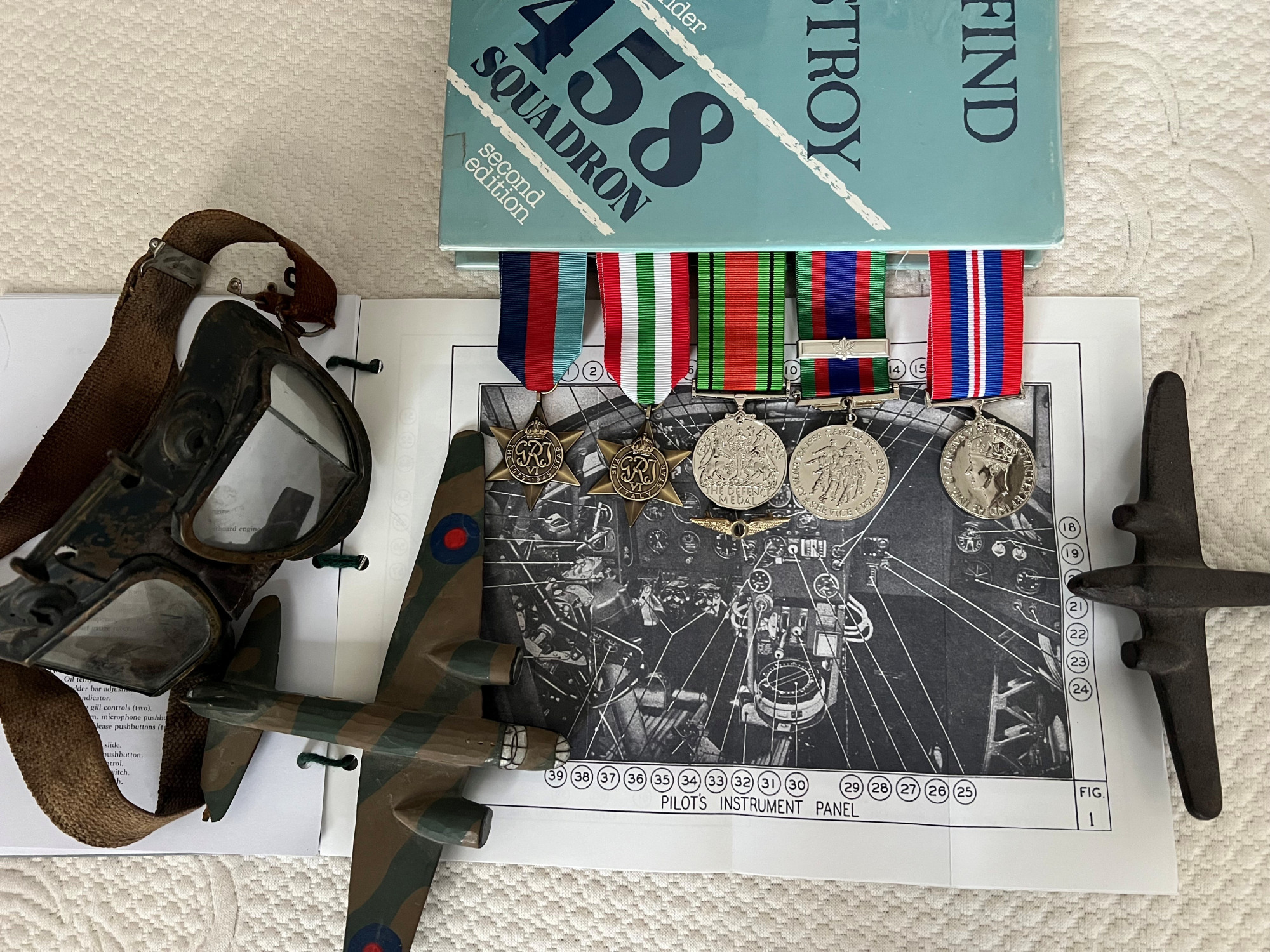
John William (Brush) Downs would be eligible for the Following Campaign and Service Medals
1939-45 Star
Italy Star *
Defence Medal
Canadian Volunteer Service Medal and Overseas Bar
General Service Medal
and the RCAF Operational Service Badge
see the attached picture
He was also eligible for the Memorial (Birks) Bar (we do not yet have a picture)
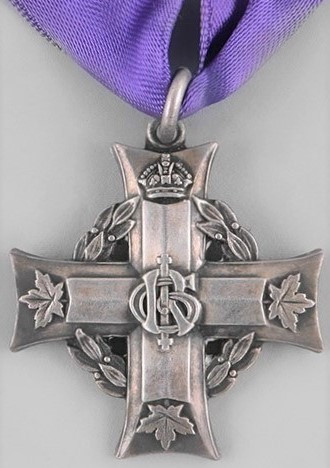
and his mother was given the Memorial Cross (picture)
The asterisk next to the Italy Star, recognizes that although he was eligible , based on 458th squadron records, he was not officially awarded the medal because he died of "Natural Causes" as opposed to anything squadron related. We are in the process of requesting a corrected eligibility from the Canadian Ministry.
This story researched and written by Adam and Cate Wagstaffe. Vancouver, BC, Canada.